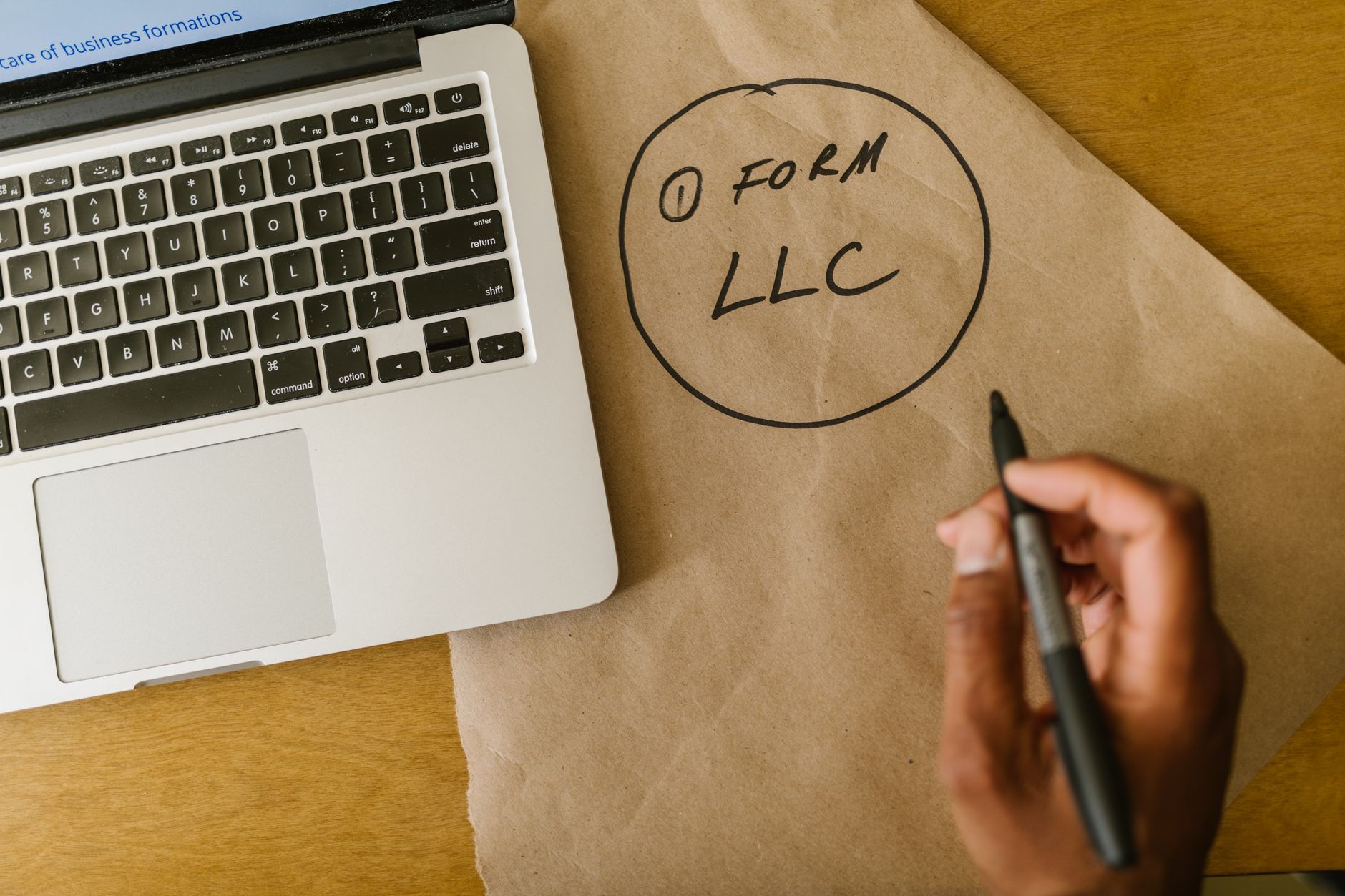
What does inc mean in business? It stands for “incorporated,” which tells you the company has gone through a formal legal process to become its own separate entity. That one word carries real weight, legally and financially, and it’s worth understanding before you decide whether to put it after your company’s name.
Most people treat “Inc.” as a prestige marker, something that makes a business sound serious. That’s not entirely wrong. But the real story is about liability protection, ownership structure, and how the IRS treats your profits, and those things matter a lot more than appearances.
What “Inc.” Means in Business
When a business incorporates, it becomes a corporation, a legal person in its own right. It can sign contracts, own property, sue and be sued, all independently of the people who own shares in it. That separation is the whole point. If the company takes on debt or gets hit with a lawsuit, shareholders’ personal assets stay out of reach, in most cases.
The term first appeared in its modern legal sense around 1811, when New York passed one of the earliest general incorporation statutes in the U.S. Before that, you needed a special act of the legislature to form a corporation. Making it a routine filing changed everything for American business.
Benefits of Incorporation
The liability shield is the obvious one, but there are others people overlook. Corporations can raise capital by issuing stock, which makes them far easier to fund through outside investors. Banks and venture firms generally prefer dealing with a corporation over a sole proprietorship or partnership.
There’s also continuity. If an owner dies or sells their shares, the corporation keeps running, which isn’t true for a sole proprietorship, because that legally dissolves when the owner exits. For a business you’re building to sell or pass on, that matters more than most people realize when they’re just getting started.
Legal Requirements for Inc.
Incorporation is a state-level process, not federal. You file articles of incorporation with your state’s secretary of state office, pay a filing fee, and in most states appoint a registered agent to receive legal notices. After that, you need bylaws, an initial board meeting, and usually an annual report each year to stay in good standing.
- Articles of incorporation (required in every state)
- Registered agent with a physical in-state address
- Corporate bylaws governing internal rules
- Annual report or statement (frequency varies by state)
- Employer Identification Number from the IRS
Delaware is still the most popular state for incorporation, especially for startups, because its corporate law is well-developed and its Court of Chancery handles business disputes quickly. For a small local business, though, your home state is usually fine.
Tax Implications of Incorporation
This is where it gets complicated, honestly. A standard C-corporation pays corporate income tax on its profits, currently at a flat 21% federal rate. Then, if it distributes dividends to shareholders, those shareholders pay personal income tax on that money too. That’s the double taxation you’ve probably heard about.
S-corporations sidestep this by passing income through to shareholders directly, similar to how an LLC works. But S-corps have restrictions: no more than 100 shareholders, all of whom must be U.S. citizens or residents. If you’re planning to bring in foreign investors, an S-corp won’t work. A C-corp will.
Comparing Inc. with LLC
An LLC gives you similar personal liability protection without the corporate structure. No board, no stock, and in most cases the tax treatment is simpler by default. Profits pass through to members and get taxed once. For a small business with a handful of owners, an LLC is usually less paperwork and cheaper to maintain annually.
| Feature | Inc. (C-Corp) | LLC |
|---|---|---|
| Personal liability protection | Yes | Yes |
| Double taxation risk | Yes (C-corp) | No |
| Investor-friendly structure | Yes | Limited |
| Ongoing formalities | Higher | Lower |
If you’re raising venture capital or planning to go public, a C-corp is almost required. VCs don’t typically invest in LLCs because of how the tax treatment flows to their funds. For everything else, the LLC deserves a serious look first.
Cost of Incorporating
State filing fees range from about $50 in Kentucky to over $500 in Massachusetts. Across states, expect to spend around $300 on the initial filing alone. A registered agent service adds another $100 to $300 per year, and an attorney to handle the paperwork properly can run $500 to $1,500 more, though online services like LegalZoom cost less if your situation is straightforward.
Ongoing costs include annual report fees, franchise taxes (California’s minimum is $800 a year regardless of revenue), and the accounting overhead that comes with proper corporate records. It adds up faster than people expect, and I’d rather you know that going in.
Is Incorporation Right for You
Understanding what does inc mean in business is the starting point, but the real question is whether incorporation fits where your business is headed. In 2023, roughly 1.5 million businesses in the U.S. were incorporated, ranging from tiny two-person shops to publicly traded giants. The structure works across that whole range, but the costs and complexity are real. If you’re early stage, an LLC often makes more sense until you have a specific reason to incorporate, like outside investors who require it. When that day comes, the process is straightforward enough to handle in about a week.
FAQs
What does “Inc.” stand for?
It stands for “incorporated,” meaning the business has legally become a corporation, a separate entity from its owners under state law.
How is “Inc.” different from an LLC?
Both offer liability protection, but a corporation has shareholders and a board, faces potential double taxation, and suits outside investors better than an LLC typically does.
What are the main benefits of incorporating?
Personal liability protection, the ability to issue stock, easier access to outside investment, and business continuity if ownership changes are the main advantages.



1 Comments