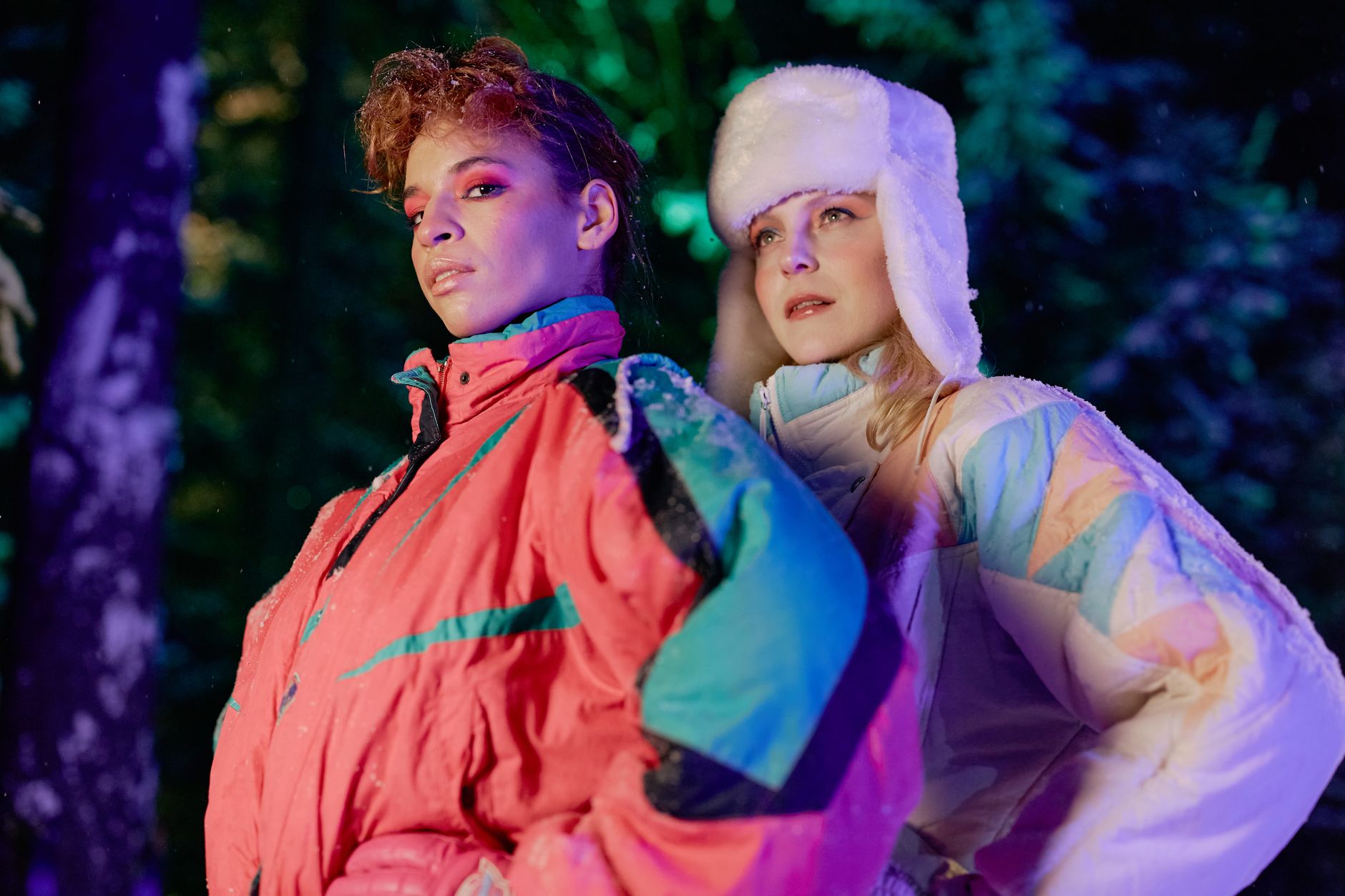
Nobody in the 1980s was trying to blend in, and the clothes made that clear. 1980s women’s fashion was essentially two separate wardrobes fighting for the same decade: one built around the corner office, the other around the music video. What’s striking, looking back, is that both sides won.
The decade started with a recession and ended with a stock market boom, and that economic whiplash shows up directly in what women wore. Early on, professional dressing felt urgent and deliberate. By the mid-1980s, pop culture had flooded in and made street-level style just as visible. You can trace almost every major trend back to one of those two gravitational pulls.
Power Dressing and Shoulder Pads
The intellectual foundation of power dressing predates the decade by a few years. John T. Molloy’s 1977 book Dress for Success argued, pretty bluntly, that women could signal authority through clothing borrowed from menswear: structured jackets, dark solids, minimal jewelry. Corporate America took it seriously, and by the early 1980s the boxy blazer with a white blouse was practically a uniform in law firms and advertising agencies.
Shoulder pads were the physical extreme of that idea. They peaked somewhere between 1984 and 1986, when even knitwear came with built-in padding. Dynasty, which ran from 1981 to 1989, probably did as much as any fashion house to spread that silhouette. Joan Collins and Linda Evans wore costumes by Nolan Miller, and retailers reported direct lifts in structured evening wear sales during the show’s peak seasons. That kind of TV-to-store pipeline was new, and nobody had a name for it yet.
Donna Karan understood the professional woman’s wardrobe problem better than most. When she launched DKNY in 1984, her pitch was essentially a capsule system: a bodysuit as the foundation, then interchangeable skirts, trousers and jackets layered over it. Working women in their 30s responded immediately. It was practical in a way that a lot of high fashion simply wasn’t, and it positioned the structured look as something you could actually dress yourself in before 7 a.m.
MTV and Street Style
MTV launched in 1981, but the moment that bent 1980s women’s fashion toward lace and layering came in 1984, when Madonna performed “Like a Virgin” at the MTV Video Music Awards. The look (lace gloves, layered necklaces, a wedding dress worn as street clothing) was picked up in malls within weeks. Not as a costume, but as actual everyday wear for teenagers and women in their early twenties.
Flashdance hit theaters in 1983 and ran a similar play. Jennifer Beals in a torn sweatshirt and leg warmers gave off-the-shoulder casualwear a legitimacy it hadn’t had before. Leg warmers, which had existed purely as dancewear, became a mainstream accessory for about two years. By 1984 you’d see them worn over jeans with no dance context whatsoever.
Neon and spandex tracksuits occupied a slightly different lane, more aerobics class than concert crowd, but equally visible. In mid-decade US department stores, a full tracksuit in a bright colorway retailed for around $30 to $60, which made it accessible in a way designer power dressing was not. Brands like Fila and Le Coq Sportif were everywhere. Street style in the 1980s treated visibility as a virtue, and these looks delivered exactly that.
Key Pieces Still Worn Today
Some of this has genuinely cycled back. 1980s women’s fashion showed up on runways in the late 2010s and never fully left. Structured blazers with exaggerated shoulders appeared at Balenciaga, The Frankie Shop and a dozen fast-fashion labels between 2019 and 2023. Vintage versions in good condition now sell for $80 to $200 on resale platforms, which would have seemed absurd fifteen years ago.
Lace layering and fingerless gloves resurface every few years, usually tied to some pop act channeling the early MTV era. Leg warmers came back hard around 2022, worn over wide-leg trousers. And the bodysuit-as-foundation idea that Donna Karan built DKNY on never really went away. A lot of what feels modern in women’s workwear has quiet roots in that decade’s experimentation with structure and versatility, though I’d admit it’s hard to know where 1980s influence ends and simple practicality begins.
The neon tracksuit is probably the most direct revival. Matching sets in bright colors have been a consistent seller since around 2020, and the silhouette is almost identical to what was on department store racks in 1985. Cheap, too, in most cases, which mirrors the original.
FAQs
What did women typically wear in the 1980s?
Two main looks dominated: structured power suits with shoulder pads for professional settings, and layered, colorful casual wear, including lace, spandex and leg warmers, shaped by MTV and movies like Flashdance.
Why did shoulder pads become so popular in the 80s?
They signaled authority at a time when women were entering corporate workplaces in large numbers. Dynasty and power-dressing culture reinforced the silhouette from 1984 through the late 1980s.
What fashion trends from the 1980s have come back?
Oversized blazers, neon matching sets, leg warmers and bodysuit layering have all returned, mostly between 2019 and 2024, through both designer collections and fast-fashion labels.


